
Oud
Oud: The Living Scent of Agarwood
From resinous wood to a fragrance of extraordinary depth, discover why true oud is unlike any other aromatic material.
6 min read
A fragrance formed by time
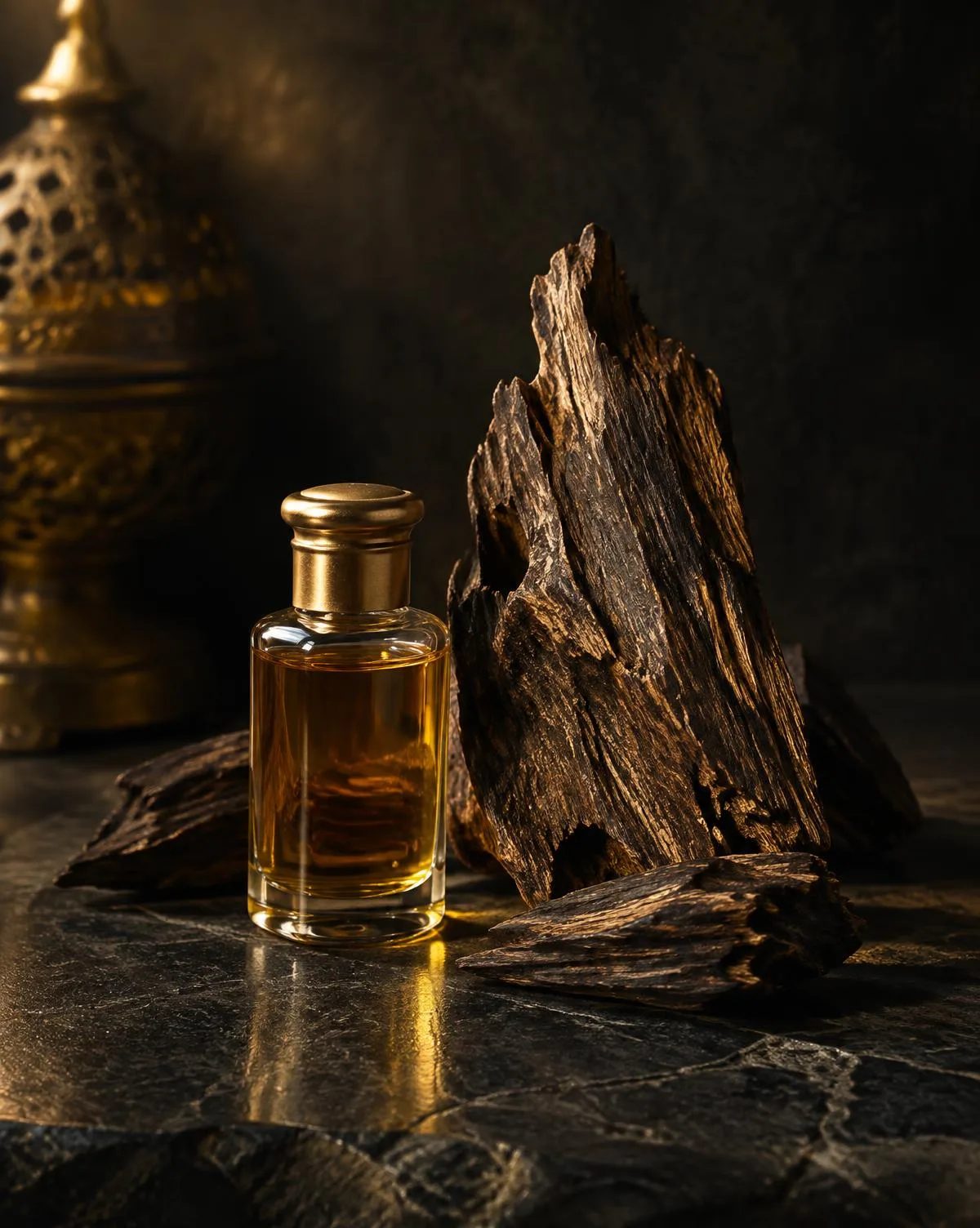
Oud is the aromatic oil distilled from resin-rich agarwood. The wood begins with trees of the Aquilaria family, but the scent collectors treasure appears only after the tree responds to injury or natural stress by producing a dark, fragrant resin. Over many years, that resin travels through the grain and transforms pale wood into something dense, complex and deeply aromatic.
This slow natural process is why genuine agarwood is rare. Climate, soil, the age of the tree and the pattern of resin formation all leave their mark. No two pieces of wood are identical, and no two oud oils unfold in exactly the same way.
Why pure oud keeps changing
A natural oud oil is not a single note. Its opening may feel bright, green, smoky or animalic before revealing warmer impressions of leather, earth, dried fruit, incense or honey. Hours later, the oil can settle into a soft woody warmth that stays close to the skin.
These transitions are part of its character. Rather than judging an oud in its first minute, apply a very small amount and follow it through the day. Warm skin, humidity and even the season can change which facets come forward.
Learning to wear oud
Begin with the tip of a clean applicator on the wrist or inner elbow. Avoid rubbing the oil, which can compress the opening. Let it warm naturally, then return to it at intervals. With patient wear, the shape of the distillation becomes clear: its lift, its heart and its long, quiet finish.
The pleasure of oud lies in this intimacy. It is less a perfume that announces itself than a material that reveals a place, a tree and the decisions of its distiller over time.