
Agarwood
Understanding Agarwood: Resin, Origin & Burn
Learn what the grain, resin and aroma of a fine agarwood chip can reveal before it ever reaches the burner.
8 min read
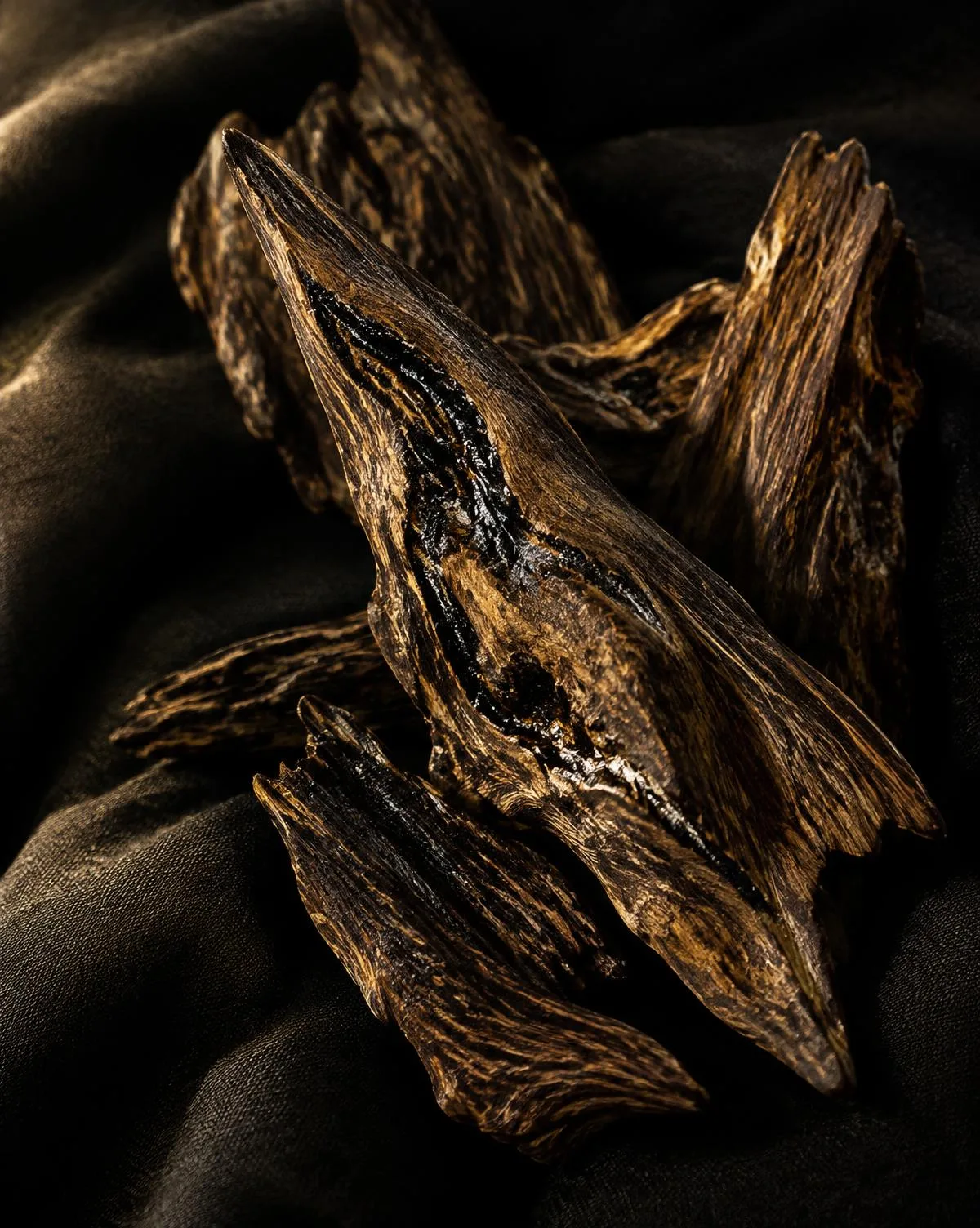
Reading the wood
Fine agarwood often reveals itself first through contrast. Pale fibres run beside dark resinous veins; some pieces feel unexpectedly heavy for their size, while others show a lustrous surface where resin has gathered. Yet appearance alone never tells the whole story. Aroma at room temperature, density, origin and the way a chip responds to heat must be considered together.
Commercial labels such as double super or sinking grade can be useful within one seller's selection, but they are not universal standards. Careful sourcing and direct sensory evaluation matter more than a name by itself.
Origin and aromatic character
Agarwood from different regions can lean towards very different profiles. Some pieces suggest cool forests, green herbs and damp earth. Others feel honeyed, leathery, fruity, spicy or incense-like. Age, tree species, microclimate and resin formation all shape these impressions.
Origin should be treated as a guide rather than a rigid promise. Even wood gathered from the same area can vary widely. The most rewarding approach is to notice the individual chip: how quickly it opens, how cleanly it warms and how long its aroma lingers.
A gentle, attentive burn
High heat can scorch agarwood before its subtleties emerge. Begin with a small chip over gentle indirect heat, allowing the resin to warm gradually. The first vapours are often the most delicate; later stages may become darker, sweeter or more balsamic.
Listen to the wood rather than chasing smoke. A fine session can be quiet, with only a thin ribbon of vapour. Using less material and lower heat often reveals more detail, turning the burn into a slow study of the wood rather than a rush of fragrance.